Bachelor’s Degree – Agroecology and Food Systems
Future graduates of ESA’s Bachelor of Science in Agroecology and Food Systems will be able to support agri-food businesses in their agroecological, food and environmental transitions. Through a hands-on, active learning approach—learning by doing—the programme covers key topics such as food processing, animal and crop production, as well as the organisation of territories and value chains.
Responsible, committed, proactive: if these adjectives describe you, this Bachelor of Science is for you!

Grade Licence | Code RNCP : 40433 | Code diplôme : 26521004
Content updated on 14 October 2026
-
Program type:
Bachelor
-
Lenght of training:
3 years
-
Teaching language
English, French
-
Campus:
Angers
Grade Licence | Code RNCP : 40433 | Code diplôme : 26521004
Content updated on 14 October 2026
Overview
PROGRAMMES OVERVIEW
The objectives of the ESA Bachelor of Science in Agroecology and Food Systems :
- Supporting agricultural and food transitions
- Participating in the digital revolution in agriculture
- Reinventing the way we produce, process and consume food
- Establishing and promoting local production
Good reasons to choose this programme : The Bachelor of Science in Agroecology and Food Systems will enable you to :
- Develop an openness to all types of agriculture,
- Improve your skills in language(s), methodology, data processing, project management, etc.
- Train for careers as a technical consultant, facilitator, technical sales representative,
- Continue your studies in a Master’s programme or engineering school.
Skills
What skills will you develop?
- Identifying agroecological problems in a given situation and providing recommendations based on a scientific approach.
- Mobilising knowledge in fundamental, applied, human and social sciences to support agricultural and environmental food transitions.
- Contributing to the implementation of innovation to support the evolution of sectors and territories.
- Integrating and actively participating in a project as part of a collective dynamic.
- Communicate, interact and convince different stakeholders in an intercultural context.
- Build a personal and professional project
TEACHING METHODS
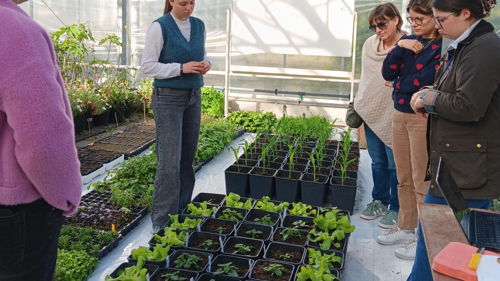
Learning by doing’ is the basic principle of active learning. The Bachelor’s programme therefore focuses on authentic research and investigation situations in which you will understand and master the various resources made available to you by your teachers.
You will carry out your project in a group, drawing on your technical skills and with the support of various resources: teachers, teacher-researchers, bibliography, e-learning, etc., and will produce a mission report.
At the end of the program, you will present your results to your sponsor and teachers.
This Bachelor of Science was developed with the support of the expertise of the ‘FA2L’ teaching training and support centre at the University of Louvain-La-Neuve, Belgium.
Tom Bouquerel
Bachelor in Agroecology and Food Systems
After my BTS ACSE, I wanted to turn to agroecology, the food transition, open myself to other more cross-disciplinary skills that would allow me to integrate the Agronomic Engineer training.
PROGRAMME
Programme
The seven key competencies will be acquired through individual and group projects, lectures, lab sessions, field works and tutorials across the following seven teaching units :
- UE 1 – Project Management Tools and Methods: Writing summaries, bibliographies, conducting interviews, project management.
- UE 2 – Environmental Impacts: Environmental, geopolitical, and food-related challenges, value sharing, environmental assessment, territorial policy responses.
- UE 3 – Fundamental Sciences: Structural biochemistry, chemistry, cell biology and embryology, animal physiology, plant physiology, statistics, and more.
- UE 4 – Applied Sciences: Animal husbandry, crop cycles, food biology and microbiology, human nutrition, raw material quality, food processing, and more.
- UE 5 – Marketing and Communication: Designing communication materials, graphic production, etc.
- UE 6 – Languages and Intercultural Studies: English, a second language, intercultural projects.
- UE 7 – Professional and Personal Projects: Trade shows, job profiles, company visits, professional networking, internships.
The Bachelor’s Degree in Agroecology and Food Systems is a three-year programme.
The Bachelor program offers internships during all three years of study, in France or internationally.
Here are some examples of internships completed by our Bachelor students:
- Winter crops, a novelty for Canadians – Canada
- Natural regeneration of hedges and implementing experiments with volunteer farmers – France
- Study of the pest Thrips parvispinus in warm plant cultivation (notably peppers) – Netherlands
- Contribution to redeploying dry bean production in Hauts-de-France – France
- Support for the economic development of farms – Benin
- Creation of a low-carbon and resilience tool for public services – France
- Biodiversity regeneration in a dairy environment – Ireland
For the 3rd year of the Bachelor program, you can now opt for an apprenticeship.
6 good reasons to pursue through apprenticeship:
- Gain genuine professional experience.
- Discover the skills and behaviors of the professional world.
- Take on responsibilities and be recognized as a full member of a company and team.
- Learn through a pedagogy adapted to professional experience in the workplace.
- Combine apprenticeship with international experience.
- Benefit from free tuition and receive apprentice remuneration.
First Year
- Project 4°C: The IPCC (Intergovernmental Panel on Climate Change) forecasters predict a 4°C increase in the global average temperature by 2100. You will raise awareness among high school students on this topic by creating a poster highlighting the challenges of climate change.
- The Farm Serving Society: One farm or several? A farm produces, but it’s more than that: it animates its territory, produces energy, welcomes city dwellers and students, cares for biodiversity, processes its products, and maintains the landscape. What model? What will the farm of tomorrow look like? Create a magazine based on field visits to different farms.
- A Low-Impact, Balanced, and Tasty Holiday Meal: Produce a recipe booklet for a holiday dinner for four people on a limited budget, taking into account societal and environmental trends as well as recommended nutritional intakes, especially regarding the reduction of meat, animal proteins, and plant proteins.
- Animal Feed and Nitrogen Emissions: Reducing nitrogen emissions is a key challenge in livestock farming. You will create a poster explaining to students the links between feed, the functioning of monogastric or ruminant digestive systems, and nitrogen flows in soil, water, and air for three workshops: dairy cows, conventional pigs, and outdoor sows.
- Crop Production and Water: Based on two agricultural operations projected to 2050, write a popular science article to assess the adaptation of one of six studied species (corn, sorghum, sunflower, spring pea, dactyl, and ryegrass) to climate change, and identify possible crop management adaptations.
- “Products Without”: More and more agro-food products are marketed without certain ingredients. You will work on creating a spread without palm oil, a sandwich bread without gluten, and a fruit paste without added sugar.
Second Year
- Legumes in All Their Forms: How can legumes be integrated into crop systems and territories? How are public policies supporting this? Are legumes a new path for sustainable food, or just a trend?
- Small Ruminants: In goat milk production, minimizing chemical inputs and respecting animals’ natural cycles means no milk production in winter. What hormonal regulation mechanisms explain the seasonality of goat cheese? What are the environmental and supply chain impacts?
Third Year
- Commissioned Project or Entrepreneurship Project:
- Real-world cases provided by companies (biocontrol, triple accounting, performance indicators…).
- Student Entrepreneurship Project (Pépite): Students develop their own entrepreneurial initiatives.
1ST YEAR
- Topics: Overview of major food-related issues and adaptation of sectors to these issues.
- Internship: 4 weeks (in the second semester), initial approach to career planning
- Detailed programme :
- Tools and methods: 9 ECTS credits
- Environmental footprint of sectors and regions: 9 ECTS credits
- Fundamental sciences: 11 ECTS credits
- Applied sciences: 8 ECTS credits
- Communication and marketing: 8 ECTS credits
- Languages and intercultural studies: 9 ECTS credits
- Internship and career project: 6 ECTS credits
2ND YEAR
- Theme: Relocation of value chains within the territory
- Internship: 8 weeks in a research laboratory or experimental station
- “English week”: To prepare for the study trip, the Bachelor program hosts, during the 3rd semester, two professors from the Netherlands, Germany, or Finland for a fully English week: courses, student presentations, and technical visits. Be ready!
- Study Trip (4th Semester): Conducted at one of our three partner universities (Finland, Germany, Netherlands). Students experience a unique approach to agriculture that aligns with climate change challenges. The three main criteria are adaptation, mitigation, and sustainable food security.
- Detailed Program:
- Tools and Methods: 4 ECTS
- Environmental Footprint of sectors and Territories: 5 ECTS
- Fundamental Sciences: 6 ECTS
- Applied Sciences: 5 ECTSOutils et méthodes : 4 ects
- Communication and Marketing: 4 ECTS
- Languages and Intercultural Studies: 4 ECTS
- Professional and Personal Projects: 2 ECTS
- Study Trip: 22 ECTS
- Internship: 8 ECTS
► Introduction to smart agriculture (2 ECTS)
► Breeding and selection towards drought resilience (4 ECTS)
► Agricultural production in water scarce areas: soil management, water management (7 ECTS)
► Project Cirkl Business Lab in Agrifood (4 ECTS)
► Integrated pest management (1 ECTS)
► Advanced English (4 ECTS)
► Seminar (2 ECTS)
► Weekly study trip (4 ECTS)
► General lectures (2 ECTS)
► English (4 ECTS)
► Project (10 ECTS)
Examples of projects:
- Plant production in an aquaponics system
- Soil health conservation
- Differences between France and Germany in public perception of controversial issues in animal husbandry
- Growth of clover varieties in winter wheat
- Research in agribusiness
► Core studies (Mandatory)
- Orientation (1 ECTS)
- Communication Skills (5 ECTS)
- Survival Finnish (3 ECTS)
► Specialised studies (Elective – minimum 8 ECTS)
- Circular Economy in Agriculture
- Animal Production & Environment
- Agriculture in Global Context
- Animal Breading Practices
- Animal Welfare
- English for Working Life
- Research Methodology
- Placement/Intership
► Multi-professionnal studies (Elective – 5 ECTS)
- Food Chain Challenges
- Green Care
3RD YEAR
The Third Year is Now Available as an Apprenticeship
Taking on responsibilities, giving meaning and practical relevance to your studies, and building knowledge from professional experience are the key goals of a 3rd year in a work-study programme.
If you remain in the full-time programme:
- 1 semester at ESA: On a thematic project of your choice, which will be the common thread for the semester. Students carry out their project in groups, drawing on their technical skills and with the support of various resources: teachers, teacher-researchers, bibliography, e-learning, etc. They produce a mission report, the results of which are presented to the sponsor and teachers at the end of the course.
Example: Plant proteins, challenge: organise a technical round table. The production, processing and role of proteins in human and animal nutrition are discussed. - 1 internship of 2 to 3 months in Research & Innovation
- Detailed programme:
- Communication, management: 5 ECTS credits
- Environmental impacts: 4.5 ECTS credits
- Applied sciences: 5 ECTS credits
- From ecology to agroecology: 5.5 ECTS credits
- Project: 5 ECTS credits
- Languages and intercultural studies: 5 ECTS credits
- Internship and professional project: 30 ECTS credits
Admissions
How to apply
Apply for a Degree
Submit your application using our online platform
- Create an account
- Complete the application form and upload the required documents
- Once completed submit your application form
You are an exchange student
If you are a student from a partner university you must be officially nominated by your university. Once you are nominated by your university you will receive a link to our online application form.
ADMISSION REQUIREMENTS
To enter the 1st year :
- Hold a general Bac (high school diploma) with a scientific focus or a Techno Bac: plant, animal, horticultural, wine-growing, biology, chemistry, physics…
- Minimum B2 level in French and in English
To enter the 3rd year :
- Hold a two-year diploma compatible with the training : plant, animal, horticultural, wine-growing, life and earth sciences, chemistry, physics…
- Two-year diploma : plant, animal, horticultural, wine-growing, biology, chemistry, physics …
- Two-year diploma Biological Engineering
- Bachelor 2 Sciences, Life Sciences
- Professional Bachelor (agri, agro, environment)
- Two-year diploma in Biotechnologies : Food; Nutrition; Food industry; Quality and distribution of food products; Promotion of agricultural products.
- Any other approved level V compatible title in the professional field concerned


Advantages of the Bachelor’s degree
Key advantages
- Benefit from active pedagogy (flipped classrooms, fab labs, design thinking…).
- Leverage the expertise of ESA’s research units.
- International exposure.
- Attend conferences and events organized by the school: inaugural lecture, research hubs led by ESA PhD students and faculty, hackathons, ESAFoodtech, etc.
- Receive guidance in building your professional project while taking advantage of ESA’s network.
- Develop agricultural skills.
- Study at one of the top Bachelor schools in biotechnology, health, and food sciences (4th according to Le Figaro Étudiant, 2025 edition).
International exposure
An intensive week of English in the third semester to prepare for the study abroad programme in the fourth semester.
Three months of study abroad in the fourth semester on a given topic, with accommodation at one of our three partner universities: AERES in the Netherlands, Fachhochschule Südwestfalen in Germany or Savonia in Finland.
Opportunity for an international internship.
Campus life
ESA is a friendly, lively place, open to the city and always buzzing with activity!
Joining our school means:
- Experiencing a rich and transformative human experience that will shape your future.
- Thriving in student life (over 20 active associations, around 100 engaged students…).
- Meeting and sharing in a multicultural environment.
- Building your professional and social network.
- Studying on 2 campuses: Angers and Paris.
Discover our campuses through the virtual tour.
TUITION FEES & FUNDING
APPLICATION FEE
- €50
- Free for students receiving scholarships based on social criteria (upon presentation of proof)
Full-time programme
- Tuition for one year: €7,566*
- Additional fees to consider:
- €100 for campus services
- €108 for work accident insurance
- €40 for BDE membership
*Indicative rate for the 2026–2027 academic year
Free training for apprentices under an apprenticeship contract. The annual cost of training is €9,700. This amount may be covered by the company’s OPCO (French skills and apprenticeship funding body).
For apprenticeship contracts, the level of coverage is specified by France Compétences. For a professional training contract, please contact the company’s OPCO.
If the cost of the training exceeds the level of coverage provided by the OPCO, the company will be asked to pay the remaining amount (remaining amount = cost of training – level of coverage provided by the OPCO) (see link above).
A training agreement is drawn up between the ESA Group and the employer, in parallel with the contract, to specify the qualification being prepared, the resources used, the cost of the training and any remaining costs.
Contact us: https://www.groupe-esa.com/en/contact-information-orientation/