M.Sc Sustainable Food Quality Management
The M.Sc. Sustainable Food Quality Management goes beyond traditional approaches to food education. By combining food science and technology with social sciences, sustainability and business, the programme develops professionals capable of understanding food in all its dimensions. From the laboratory to the marketplace, from production to consumption, students learn to connect scientific knowledge with societal needs and industry challenges.
Because the future of food requires more than one perspective.

RNCP Code No.39195
Content updated on 20 November 2026
-
Qualification:
State-recognised Master of Science
-
Entry requirements:
Bachelor’s degree (completed or final-year students)
-
Lenght of training:
One-year or Two-year MSc
-
Status:
Full-time study or Apprenticeship
-
Teaching language:
English
-
Campus:
Angers

RNCP Code No.39195
Content updated on 20 November 2026
Overview
Programmes overview
The global food industry is undergoing major transformation. Climate change, evolving consumer expectations, food safety challenges, stricter regulations and the need for sustainable production are reshaping how food is produced, processed and marketed.
Food professionals must now combine scientific knowledge, quality management and sustainability expertise to respond to these interconnected challenges.
The M.Sc. Sustainable Food Quality Management prepares future professionals to take on this responsibility.
An integrated understanding of food
Connecting knowledge, people, systems and business.
The food industry needs professionals who can connect science, business, sustainability and global perspectives.
1. Science & Technology : Understand the scientific and technological foundations of food, from formulation and processing to food quality, safety and sensory
2. People & Society : Explore how culture, consumer behaviour, eating habits and societal expectations influence the way food is perceived, valued and consumed.
3. Sustainability & Food Systems: Understand the environmental, economic and societal challenges shaping food systems, and explore approaches to more sustainable and resilient food production and consumption.
4. Business & Innovation : Discover how food products and ideas can create value through innovation, entrepreneurship, marketing and business strategies.
By connecting these four dimensions, students develop a broader understanding of the food sector and the ability to approach complex challenges from multiple perspectives.
What makes this programme different?
Food is more than what we produce, process and consume. It is also shaped by people, cultures, societies, markets and the environment.
The M.Sc. Sustainable Food Quality Management offers a distinctive 360° interdisciplinary approach to food, bringing together natural sciences, food technology, social sciences, economics and business. Rather than examining food from a single perspective, the programme helps students understand the connections between food production, processing, quality, consumption, sustainability, innovation and value creation.
Learning beyond the classroom
Learning goes beyond theoretical knowledge. Throughout the programme, students benefit from regular and direct interaction with academics, researchers and food industry professionals, gaining insights into current industry practices, emerging challenges and real-world applications.
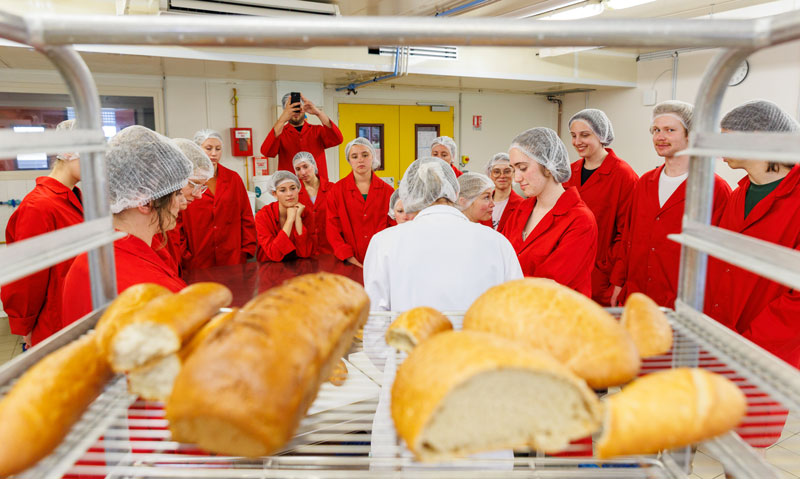
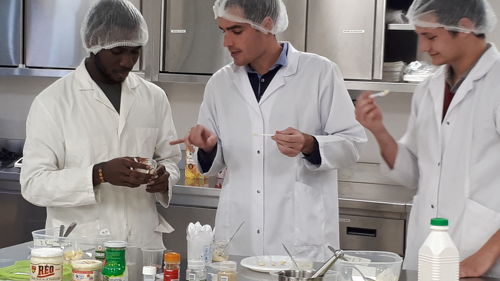
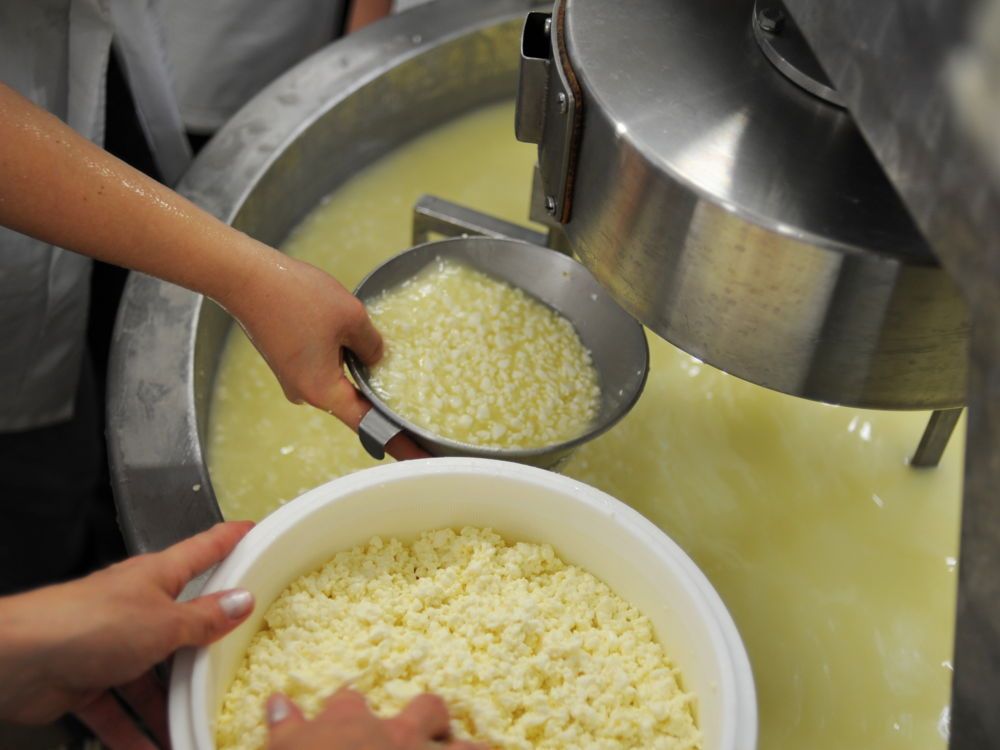
Through laboratory work, practical workshops, case studies, factory visits, industry-sponsored projects (name drop company we have worked with before) and discussions with sector experts, students are encouraged to apply their knowledge, connect theory with practice and understand how scientific concepts translate into real-life professional contexts.
With the opportunity to gain up to 10 months of professional experience over the two-year programme, explore international mobility opportunities and choose between full-time study and an apprenticeship pathway, students progressively develop the academic expertise, practical competencies and professional networks needed for their future careers.
A programme connected to industry needs
The programme maintains strong and ongoing links with the food industry through an annual industry advisory board, bringing together food industry professionals, academics and other key sector stakeholders.
These exchanges provide valuable insights into evolving industry expectations, emerging challenges and changing professional competencies. They contribute to the regular review and continuous improvement of the curriculum, helping ensure that the programme remains relevant, responsive to industry needs and aligned with developments in the food sector.
By maintaining this close connection between academia and industry, we ensure that students develop knowledge and skills that are not only academically grounded but also relevant to the realities of the professional world.
Career Opportunities
The food sector is evolving, creating demand for professionals who can connect food science, quality, sustainability, consumer perspectives and business. With its multidisciplinary approach, the M.Sc. Sustainable Food Quality Management opens doors to diverse career opportunities across the food industry and beyond.
- Food Quality & Safety
Quality Assurance Manager · Food Safety Specialist · Quality Auditor - Sustainability & Food Systems
Sustainability Officer · Food Systems Project Manager · Sustainability Consultant - Food Innovation & Valorisation
Product Development Specialist · Food Innovation Officer · Food Valorisation Project Manager (opportunities also include promoting and developing the value of local and traditional food products through product identity) - Marketing & Business Development
Food Marketing Specialist · Brand Manager · Business Development Officer - Consumer Research & Sensory Analysis
Consumer Insights Analyst · Sensory Evaluation Specialist · Market Research Analyst - Food Policy, Economics & Research
Food Policy Officer · Food Systems Analyst · Research Assistant
Graduates can start their own business or pursue careers in food manufacturing, agri-food businesses, start-ups, consulting firms, certification bodies, research organisations, public institutions and international organisations.
Programme
Learning Journey at a Glance
- 120 ECTS
- 4 semesters
- 6-month mandatory internship
- Industry sponsored case studies
- Close contact with industry professionals and academics
- Professionalisation (Job market preparation and networking)
Syllabus
Food Science & Quality Fundamentals
Food science, food microbiology, food chemistry, analytical approaches and the scientific foundations of food quality.
Food Safety & Quality Management
HACCP, food safety management systems, auditing, certification, quality assurance and international food regulations.
Sustainable Food Systems
Sustainable food production and consumption, environmental assessment, resource management and food systems analysis.
Food Innovation & Value Creation
Food product development, processing, innovation strategies and food valorisation. Explore how food products create value through their tangible qualities, such as composition, quality and sensory characteristics, as well as their intangible dimensions, including origin, identity, reputation and cultural significance. Discover approaches such as PDO and PGI schemes, product promotion, branding and storytelling, with insights into the valorisation of local and traditional food products.
Food Business & International Markets
Consumer behaviour, food marketing, business strategy, international trade, market dynamics and product positioning in evolving global markets.
Professional Integration
Industry projects, professional experience, applied research, case studies and dissertation.
Who can apply ?
The Master programme welcomes applications from students worldwide with diverse academic backgrounds and an interest in the food sector, sustainability and the transformation of food systems.
Academic requirements
To be eligible, applicants must have completed at least three years of undergraduate studies (equivalent to a bachelor’s degree), or be currently enrolled in the final year of their bachelor’s degree, in one of the following fields :
- Science, including Biology, Food Science, Chemistry or Agronomy
- Economics or Marketing
- Environmental Sciences
- Other related disciplines
Applicants from other academic backgrounds may also be considered if they can demonstrate a clear link between their previous studies or professional experience and the objectives of the programme, together with a strong interest in the food sector and its scientific, environmental, social and economic challenges. All applications are assessed individually by human.
Applicants holding a four-year Bachelor’s degree in a relevant field, or a postgraduate or Master’s degree, may be eligible for direct admission to the second year of the programme, subject to an individual assessment of their academic background and previous studies. Please contact us for further information about this admission pathway.
English language requirements
A minimum English proficiency level of B2 (or equivalent) is required. Applicants may demonstrate their proficiency through recognised certifications with the following minimum scores:
- TOEIC: 785 (Reading and Listening) or 310 (Writing and Speaking)
- TOEFL ITP: 550
- TOEFL iBT: 65
- IELTS: 5.5
- Cambridge English: First Certificate in English (FCE)
- CEFR: Level B2
- Or equivalent
Applicants whose first language is English or who have completed their previous degree entirely in English may be exempt from providing a language certificate, subject to supporting documentation.
Interest in the food sector
Applicants should demonstrate a genuine interest in the food sector (traditional or otherwise) and its scientific, environmental, social and economic challenges. Their motivation and academic background are assessed individually as part of the admission process.
For questions about eligibility, admission requirements or specific registration options, please contact our team.
Full-time study
A two-year academic pathway combining coursework, applied projects and professional experience.
Direct entry into Year 2 may be possible for candidates with relevant professional experience or who meet the required Year 1 learning outcomes.
Apprenticeship
A work-study programme
Students may complete the second year or the full two-year programme through an apprenticeship contract (contrat d’apprentissage), combining academic training at ESA with practical professional experience within a host company in France.
Eligibility and conditions
- Applicants must generally be under 30 years old (29 years old or younger) when signing the apprenticeship contract. Specific legal exemptions may apply.
- Applicants must meet the applicable occupational health requirements.
- Students must secure an apprenticeship contract with a host company in France.
Benefits of apprenticeship
- Apprentices receive a salary in accordance with French regulations, based on their age and year of apprenticeship.
- Apprentices do not have to pay tuition fees for the academic year in which they have an active apprenticeship contract.
- Apprentices gain practical skills and valuable professional experience while completing their Master’s degree.
Apprenticeship calendar
The programme follows a defined alternation schedule between ESA and the host company.
Admission & Qualification
Who can apply ?
The Master programme welcomes applications from students worldwide with diverse academic backgrounds and an interest in the food sector, sustainability and the transformation of food systems.
Academic requirements
To be eligible, applicants must have completed at least three years of undergraduate studies (equivalent to a bachelor’s degree), or be currently enrolled in the final year of their bachelor’s degree, in one of the following fields :
- Science, including Biology, Food Science, Chemistry or Agronomy
- Economics or Marketing
- Environmental Sciences
- Other related disciplines
Applicants from other academic backgrounds may also be considered if they can demonstrate a clear link between their previous studies or professional experience and the objectives of the programme, together with a strong interest in the food sector and its scientific, environmental, social and economic challenges. All applications are assessed individually by human.
Applicants holding a four-year Bachelor’s degree in a relevant field, or a postgraduate or Master’s degree, may be eligible for direct admission to the second year of the programme, subject to an individual assessment of their academic background and previous studies. Please contact us for further information about this admission pathway.
English language requirements
A minimum English proficiency level of B2 (or equivalent) is required. Applicants may demonstrate their proficiency through recognised certifications with the following minimum scores:
- TOEIC: 785 (Reading and Listening) or 310 (Writing and Speaking)
- TOEFL ITP: 550
- TOEFL iBT: 65
- IELTS: 5.5
- Cambridge English: First Certificate in English (FCE)
- CEFR: Level B2
- Or equivalent
Applicants whose first language is English or who have completed their previous degree entirely in English may be exempt from providing a language certificate, subject to supporting documentation.
Interest in the food sector
Applicants should demonstrate a genuine interest in the food sector (traditional or otherwise) and its scientific, environmental, social and economic challenges. Their motivation and academic background are assessed individually as part of the admission process.
For questions about eligibility, admission requirements or specific registration options, please contact our team.
How to apply
Admissions are based on candidate’s qualifications (academic results, cover letter,..) and individual interview (Motivation, English language level,..).
For enrollment in September 2027, online application is open from 15 December 2026 to 15 may 2027.
Applications for the September 2027 intake open on 15 December 2026 and closes on 15 May 2027.
We encourage prospective students to apply early to allow sufficient time for the application review, interview and final admission decision.
The admission process generally takes between 4 and 12 weeks from the date of application submission.
Application process
- 1 – Prepare your documents
- 2 – Access online application platform
- 3 – Complete application form
- 4 – Upload all the required support documents
- 5 – Submit your application for review
If your application is shortlisted, you will be invited to an interview as part of the selection process. Following the interview, the Admissions Jury will review your application and communicate its final decision, usually within three weeks after the interview. The overall admission process, from submitting your application to receiving the final decision, generally takes 4 to 12 weeks.
| Required document | Details |
| Identification document | Passport or national identity card (for EU applicants) |
| Cover letter | A letter explaining your motivation for joining the programme (Max. 1000 words) |
| Curriculum Vitae (CV) | Maximum 2 pages. |
| Academic diplomas and certificates | Degree certificates, diplomas or certificates of completion for all relevant previous studies. Final-year students may provide proof of current enrolment, together with a letter from the Programme Director (or equivalent) confirming their expected graduation date. |
| Academic transcripts | Official transcripts of records for previous university studies. |
| Letter of recommendation | A recommendation letter (single) if you have two then you may add it in additional documents |
| English language proficiency certificate | IELTS, TOEIC, TOEFL, Cambridge English or an equivalent qualification, where applicable. |
Applicants may also upload supporting documents under the Additional Documents section, including:
- Additional recommendation letters.
- Foreign language proficiency certificates.
- Certificates of academic or professional achievements.
- Any other documents supporting their application.
Additional documents may be requested depending on the applicant’s academic background and individual circumstances.
Webinar schedule
If you need more informations, you can register for one of our monthly online information webinars, where we present the programme, explain its structure and opportunities, and answer your questions live.
Webinars are held on the 15th of each month, starting on 15 December 2026. If the 15th falls on a weekend or public holiday, the webinar will take place on the next working day. Any changes to the schedule will be communicated in advance.
We look forward to meeting you!


Tuition fees
Tuition fees
For the 2027 intake, the tuition fees for one academic year in full-time study are:
- €9,500 in tuition fees
- + €108 for student insurance covering work experience and internship placements
- + €100 towards student life at ESA
- + €105 for the French Student and Campus Life Contribution (CVEC)
- Registration costs at the University of Angers
- Academic tuition and teaching activities
- Access to learning resources and facilities at ESA
- Mandatory educational trips, study visits and programme-related activities (where applicable)
- Accommodation and living expenses
- Meals and personal expenses
- Travel and transportation costs, unless otherwise specified
- Health insurance and other personal insurance
- Visa and residence permit fees (where applicable)
- Optional activities and additional personal expenses
Funding
Conditions for obtaining scholarships for mobility aids are set by funding organizations and vary from program to program. They are subject to decision from funding organizations and should therefore not be considered a “must have”.
Contact us: https://www.groupe-esa.com/en/contact-information-orientation/