
Higher National Technical Diploma in Landscape Architecture
Are you creative and hands-on? Do you enjoy nature and working outdoors? Are listening to others and giving advice among your qualities?
Then a landscape gardening Higher National Technical Diploma is for you! The Higher National Technical Diploma in Landscaping brings you right into the world of gardens and the professionals who work in it.


-
 Nature :
Qualification-leading course
Nature :
Qualification-leading course
-
 Lenght of training:
2 years
Lenght of training:
2 years
-
 Terms and conditions:
Work-study programme
Terms and conditions:
Work-study programme
-
 Status:
Holder of a Level 4 qualification: A-levels (general, technological or vocational) or equivalent
Status:
Holder of a Level 4 qualification: A-levels (general, technological or vocational) or equivalent
Overview
Objectives
Choosing the Landscape Architecture Higher National Technical Diploma at ESA means:
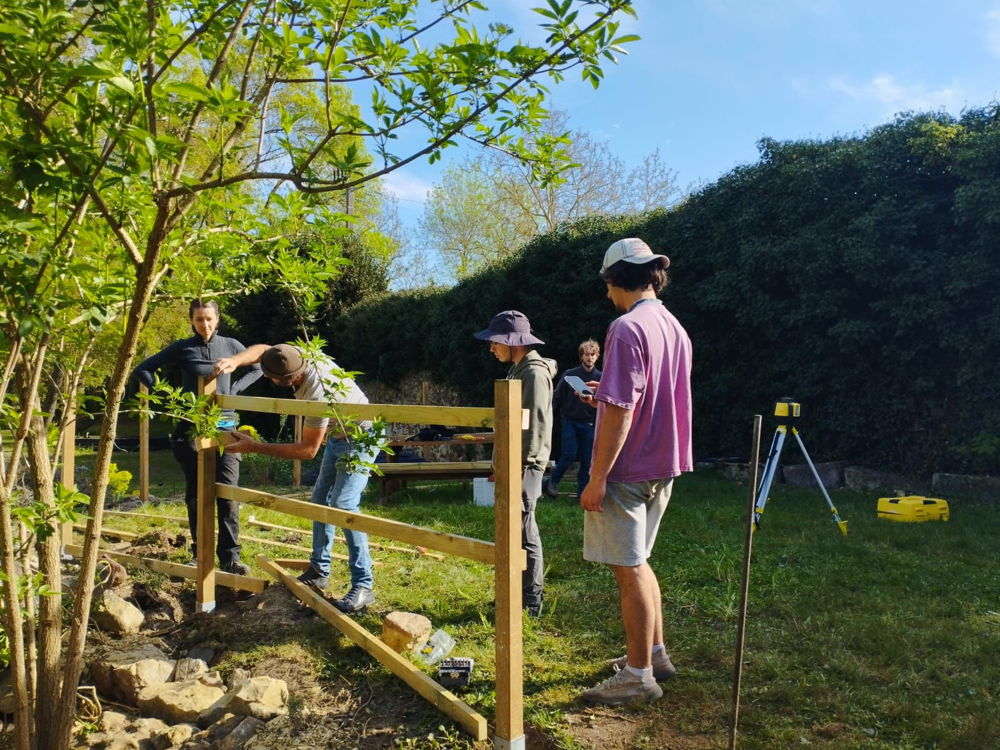
- Learning from instructors who work either in the field or in design offices. They draw on the rich horticultural and plant heritage of the Pays de la Loire region and regularly involve industry professionals, while offering numerous hands-on, real-world learning situations.
- Receiving guidance in building your career path, whether you are entering the job market for the first time or considering a career change.
- Getting strong support in finding an apprenticeship through ESA’s professional network, which includes private design offices, landscaping companies, and local authorities (such as the metropolitan areas of Angers, Nantes, Saint-Nazaire, and the urban community of Brest), as well as opportunities throughout France.
On the Higher National Technical Diploma in Landscape Architecture, you will learn:
- Work organisation and team supervision
- Vegetation management and installation
- Management of structures and utility networks in landscape projects
- Technical and financial management of construction sites
- Development of landscape design projects
- Landscape analysis
- Garden design
- How to respond to price requests in public procurement
- Project planning
- The diversity of horticultural products through visits to nurseries
- Discussions on current topics: differentiated management, green roofs, etc.
- E-learning training for Certiphyto and CACES
- Visits throughout the course (e.g. Chaumont Gardens, PAYSALIA), opening your mind to other techniques, other worlds and other eras
- Participation in plant identification competitions and WorldSkills
- Carry out preliminary landscape studies
- Take part in the design and development of projects
- Implement and manage landscaping projects
- Handle administrative and financial management tasks
- Contribute to team supervision and coordination
Key figures

97%
success rate in 2025

95%
are satisfied with the training in 2025

58%
will be in employment (six months after completing their training) in 2025
Programme
Programme
- 60% of the time spent in apprenticeship training
- 40% of the time at ESA
- Engaging with today’s world
- Developing your personal and professional career path
- Communicating in a variety of situations and contexts
- Organising team work for landscaping projects
- Managing vegetation in landscaping projects within a context of ecological transition
- Managing landscaping structures and networks
- Ensuring the technical and financial management of projects
- Developing a landscaping project
- Urban agriculture,
- Landscapes and health,
- Wild plants
Enabling the acquisition of skills and knowledge through the combined perspectives of several disciplines on the same subject (case studies, surveys, field visits, practical work, etc.).
Admissions
Admission process
Required level for admission to the Higher Technical Qualification
- Create an account
- Complete the application form and upload the required documents
- Once completed submit your application form
You are an exchange student
If you are a student from a partner university you must be officially nominated by your university. Once you are nominated by your university you will receive a link to our online application form.
3 good reasons to choose the Higher Technical Qualification
01.
An environment-focused training programme
to take environmental issues into account and adopt environmentally friendly practices.
02.
The pitch comes first
analyse a site, plan works and manage landscaping projects in real-life situations.
03.
Project management
understand how a construction site is organised, and manage a team, equipment and costs.
Advantages of the Higher Technical Qualification
International outlook
To gain a better understanding of the world, enhance your CV and gain a unique personal experience:
- A one-week group trip to France or elsewhere in Europe.
You’ll set off on a trip to discover remarkable architecture and exceptional gardens, studying their design and history on site.
- A two-week individual trip to Europe.
Professional option: depending on your preferences and circumstances, you can travel to the European country of your choice for a full immersion in a landscaping company or similar organisation (nursery, etc.).


TUITION FESS AND FUNDING
Tuition fees
Training is free for apprentices or participants on a professionalization contract.
The annual cost of the program is €. 8 200. For companies established in France, the cost may be covered by an OPCO (French skills and apprenticeship funding body).
For an apprenticeship contract, the coverage level is specified by France Compétences or the OPCO (French skills and apprenticeship funding body)
If the training cost exceeds the OPCO coverage level, the remaining balance will be charged to the company
(remaining balance = training cost – OPCO coverage level).
It is necessary to consult your OPCO to determine the coverage level for the training.
A training agreement is established between Groupe ESA and the employer alongside the contract, specifying the qualification pursued, resources provided, training cost, and any remaining balance.
- Student Union (BDE) membership fee: €20
- Group trip (first year only): €400
*Price applicable for the 2026–2027 academic year, for information purposes only